
Seven steps, one continuous thread. Each step answers a question you would otherwise ask a vendor.
1
Onboarding
How do I get my project in?
Describe your product and team once. The workspace is set up around it.
2
Requirements decomposition
What exactly am I buying?
A brief becomes a PRD and user stories. Each story is a requirement you can trace.
3
UI editor
Is this what I meant?
Review and adjust screens against the stories before code is written.
4
AI-augmented, human-verified development
Who checked the code?
AI drafts the code. People verify each Brick against test cases agreed up front.
5
Cost and timeline calibration
Why this price and this date?
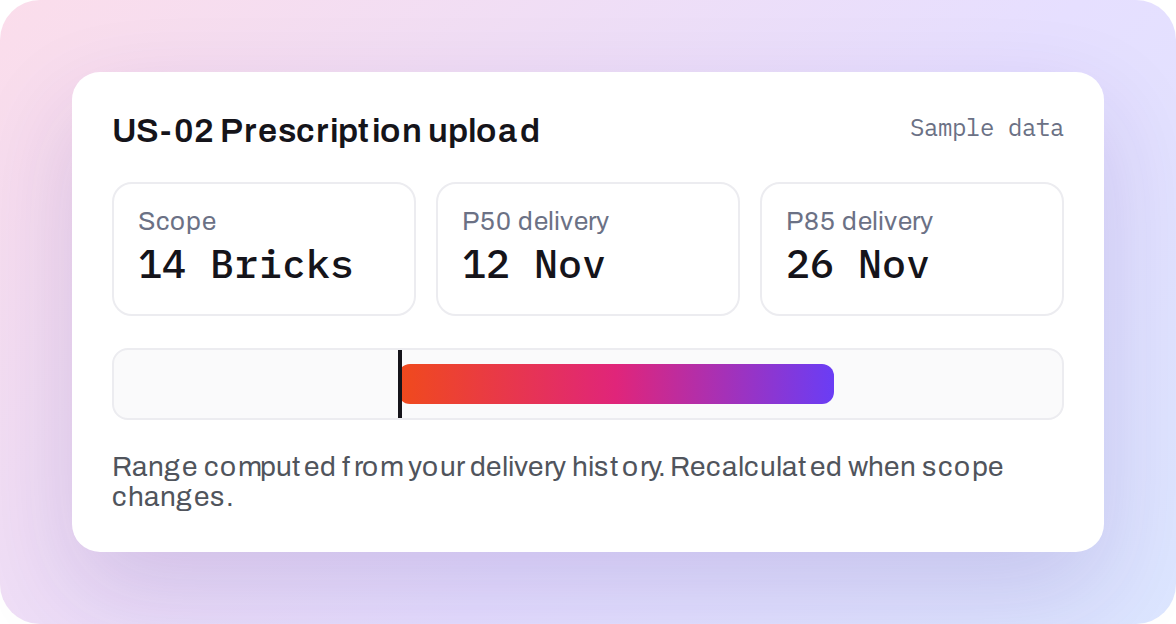
Estimates in Bricks with a P50–P85 delivery range, calibrated from delivery history.
6
Code quality and traceability
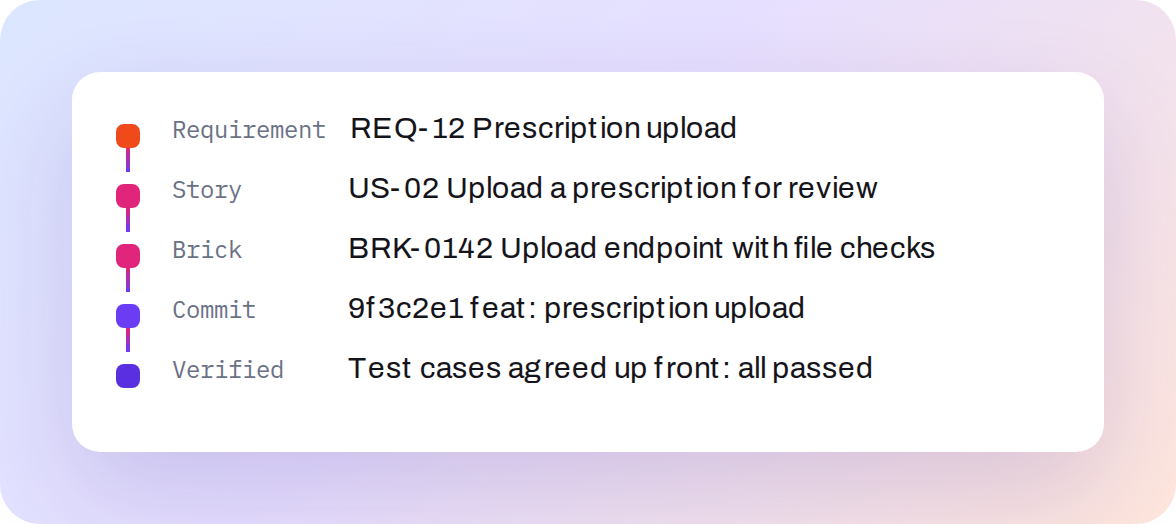
Which commit delivers this story?
Every story links to its commits, and the code is scored for quality.
7
Documentation and API reference
What was actually delivered?
Documentation and API reference are generated from the verified work.
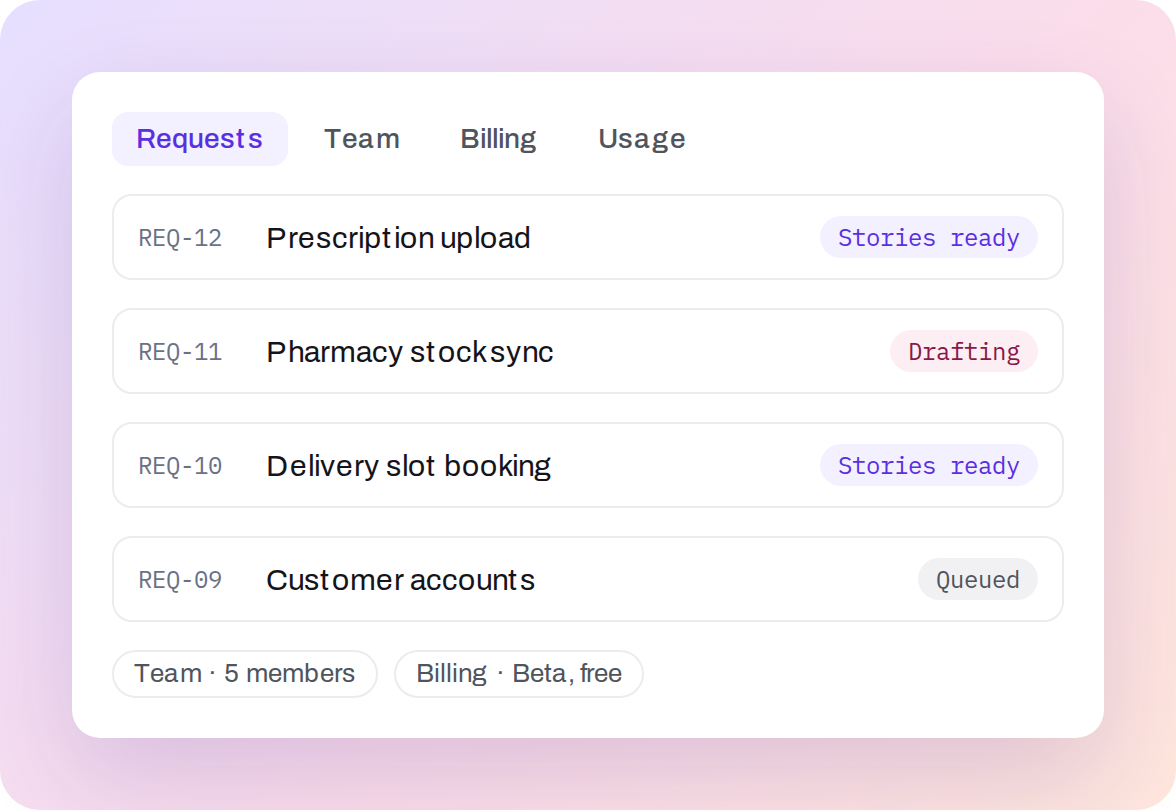
Product screens. Two are working in the beta. Two are concepts.
PRD drafted into user stories
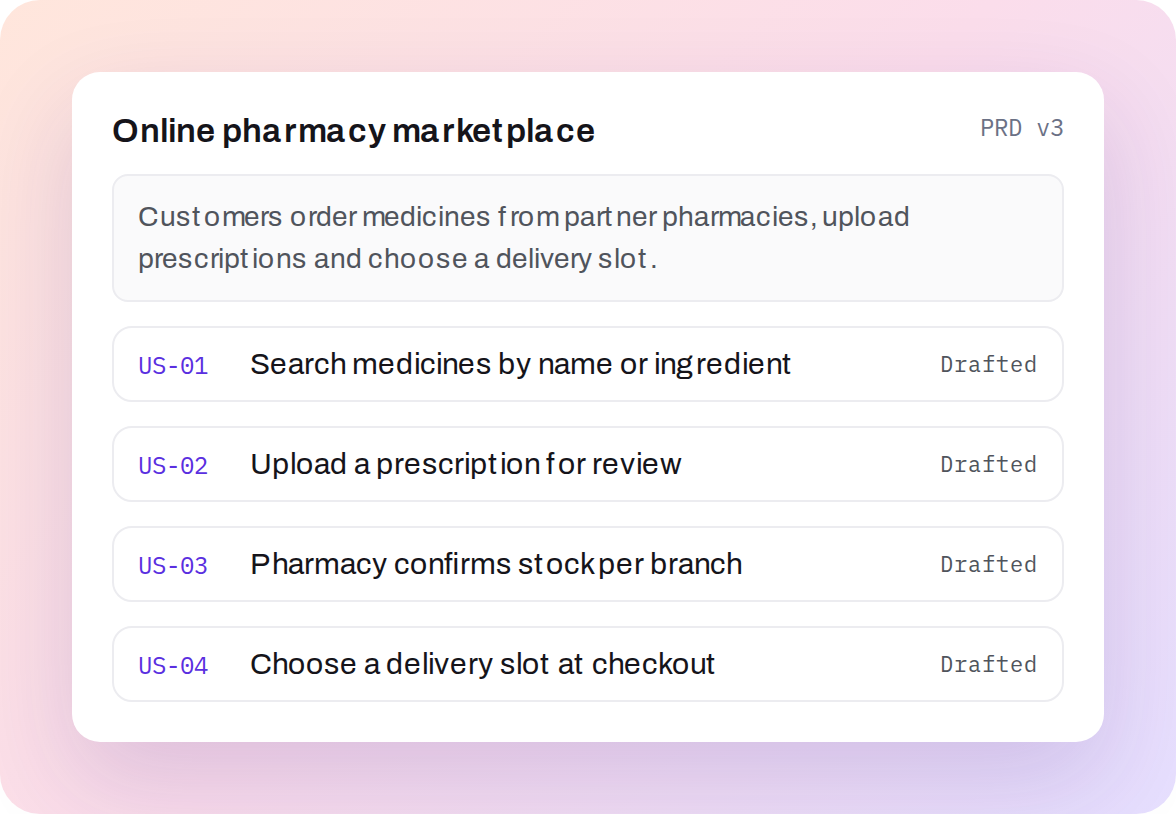
Team workspace
Estimate in Bricks, P50–P85
Story-to-commit trace
Two sides, one set of numbers.
Customer
+ See every price as Bricks, line by line
+ Know the delivery range before you commit
+ Accept work against test cases agreed up front
Delivery team
+ Decompose a requirement once
+ Price from your own delivery history
+ Turn a scope change into a computed difference